

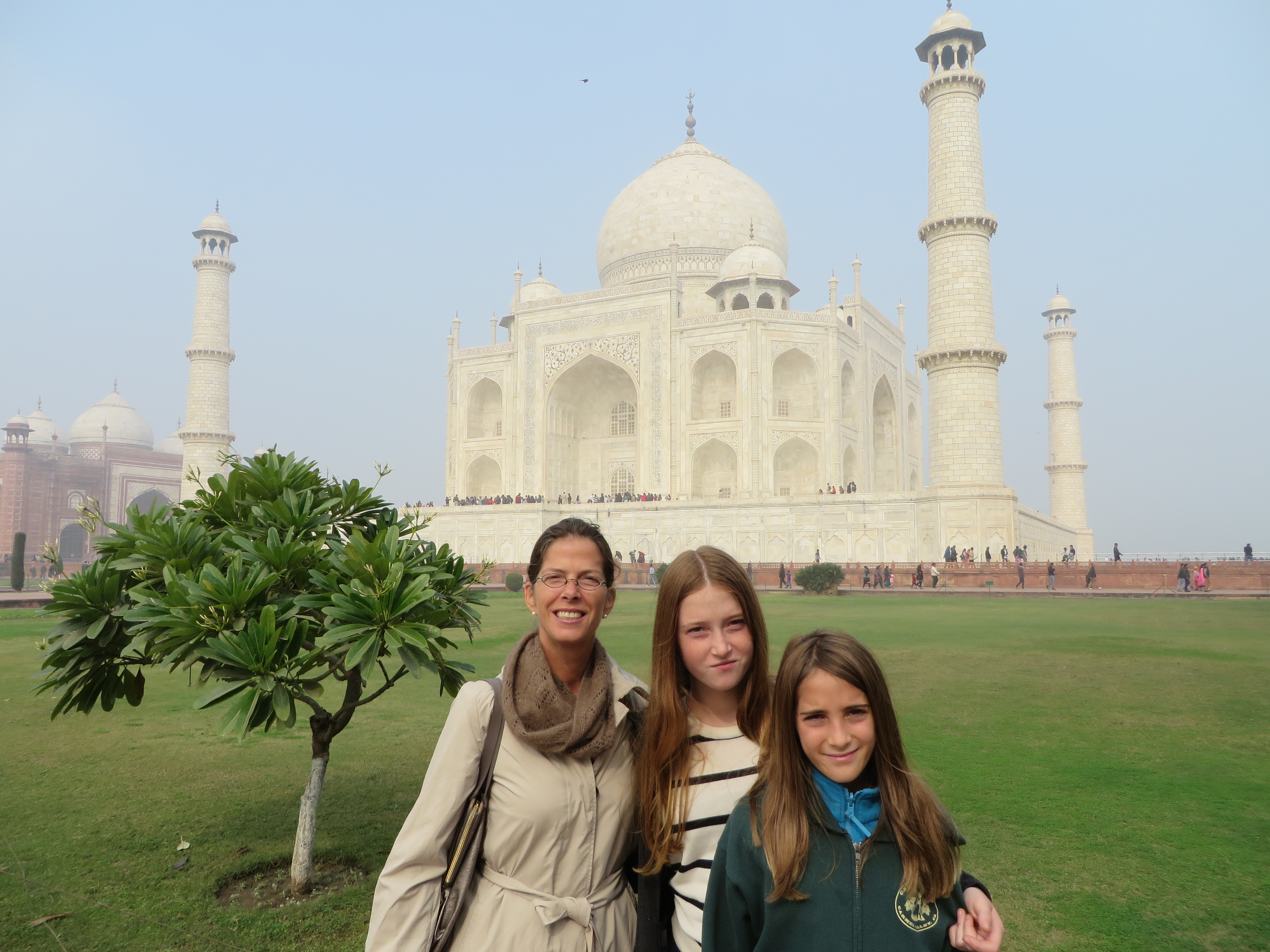
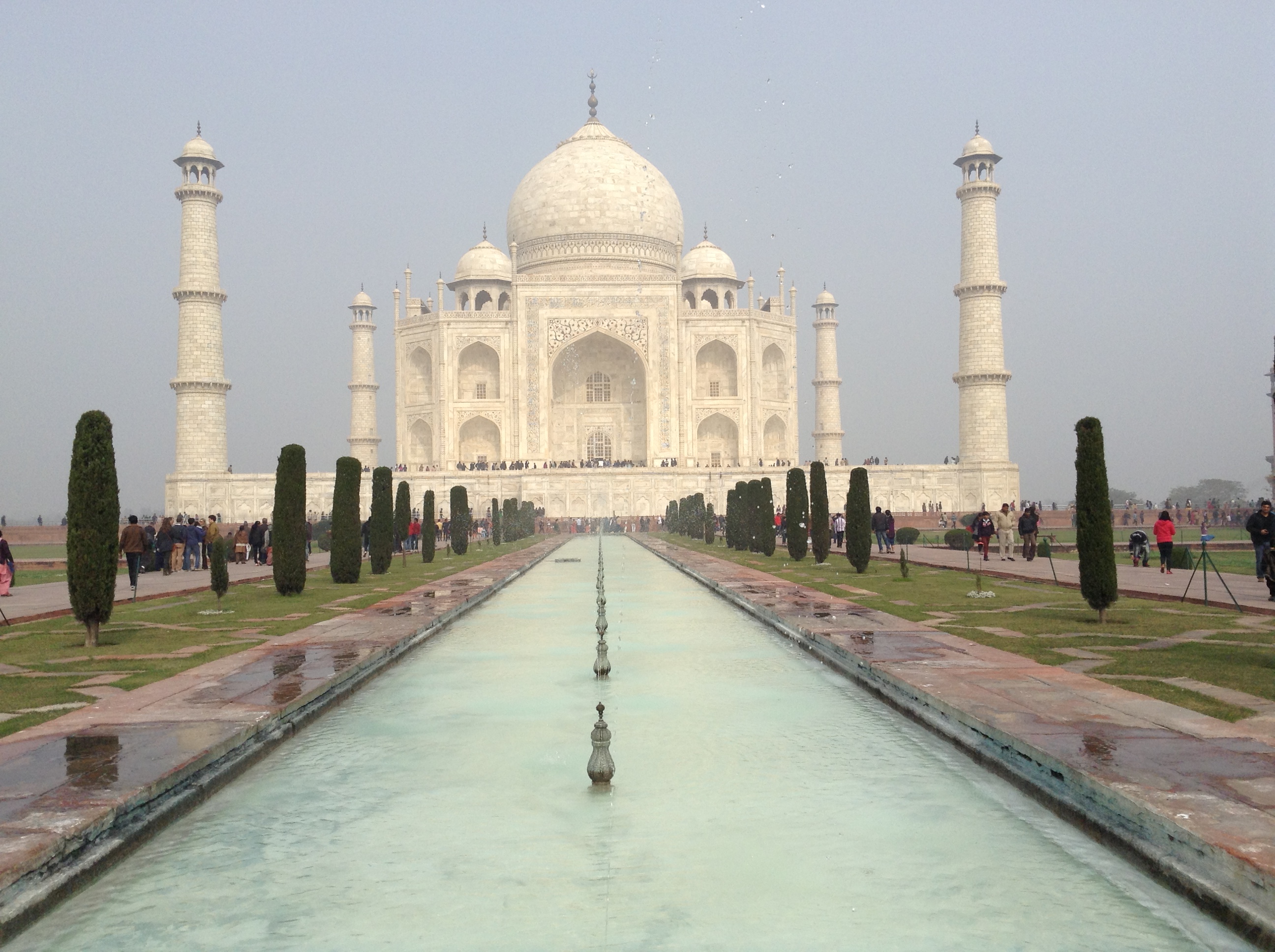
She is all the things people say. Beautiful. Architecturally brilliant. Perfectly symmetrical.*
Shah Jahan, the Mughal emperor from 1628-1659, built the Taj Mahal as the mausoleum for his wife, Mumtaz Mahal. She was the love of his life. She died while birthing their 14th child at the age of 39. When he emerged from his quarters many days later, he declared that he would build for her the world’s greatest mausoleum. And he did. It took 20,000 workers 18 years.
I’d like to say that she’s just another pretty face; but there is something mesmerizing about her. As you enter the arched gateway she draws you in and then pulls away once you’ve passed through. The inlaid verses of Koran that surround her entry gradually increase in size as they rise so that it stays a visual constant despite its growing distance from the viewer. An optical tease.
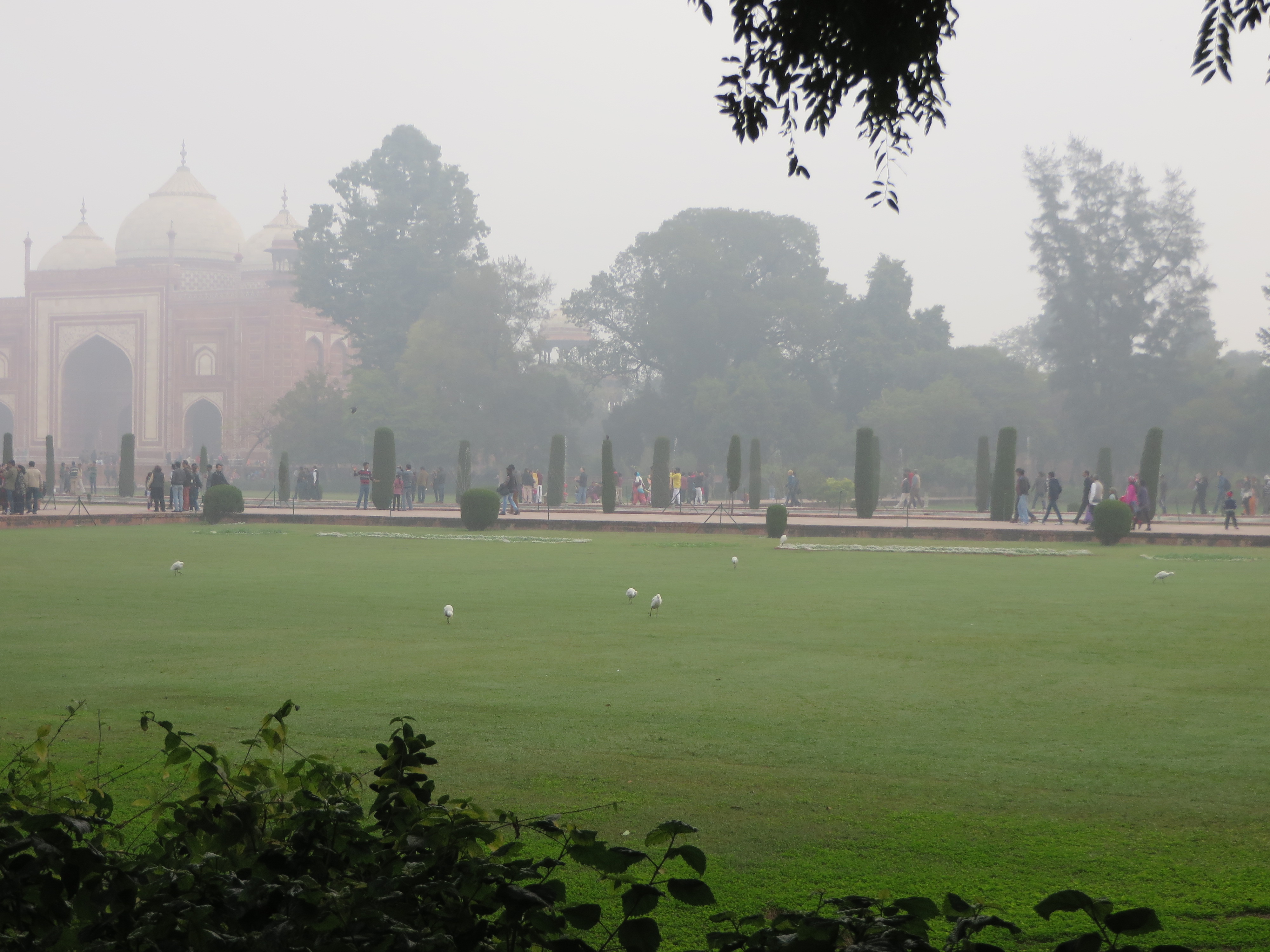
Between the gate and the tomb itself is a garden in four quadrants created in accordance with the Koran’s description of the garden of paradise (the charbagh). Originally all of the areas you now see covered in lawn in our photos were sunken gardens planted with vineyards, fruit trees and rose gardens. The birds (ring-necked parakeet, common starling, purple sunbird) would have been flying among and on top of the flowering trees in easy view of the strolling Emperor.
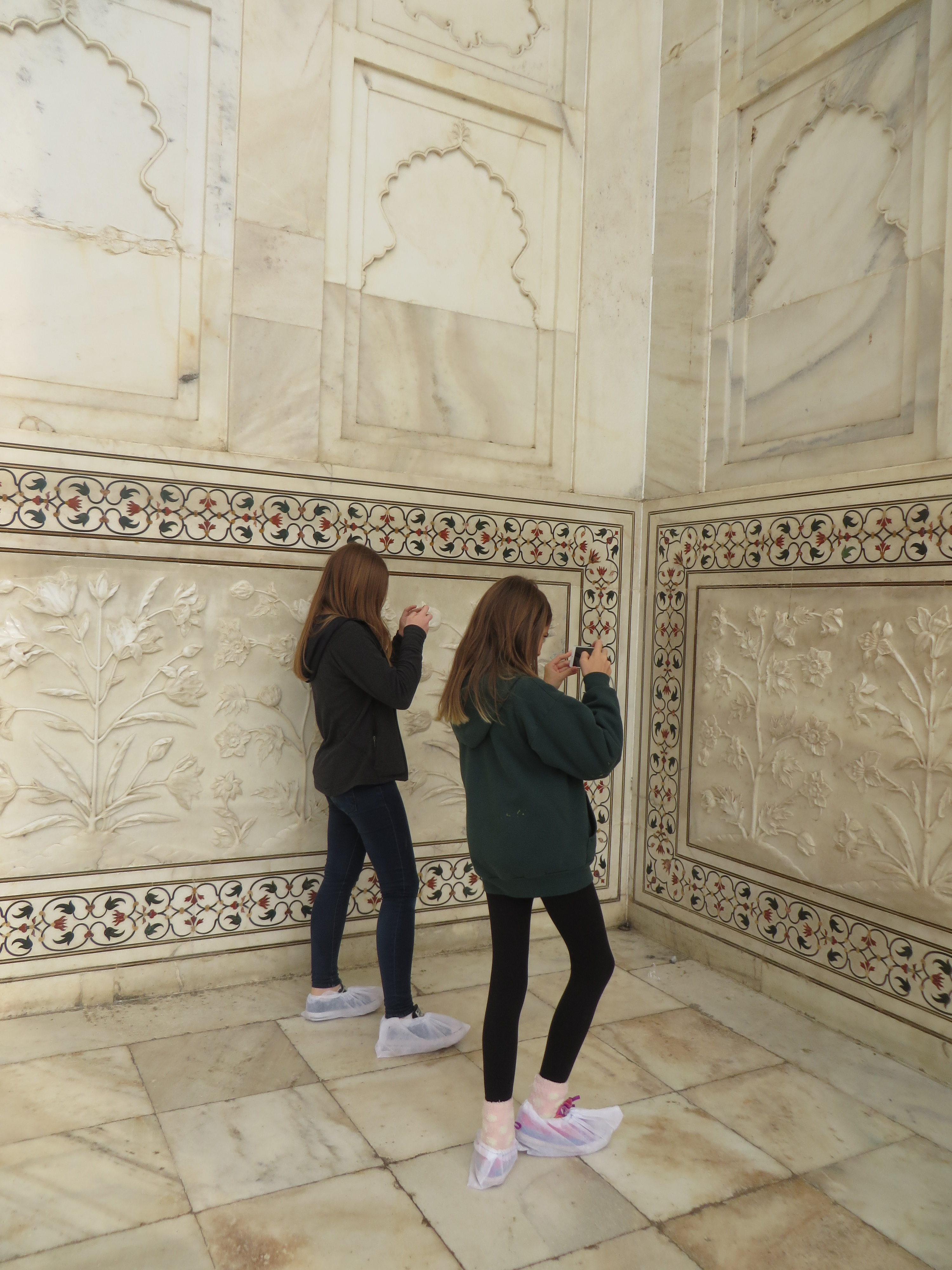
Beyond the garden is the mausoleum itself. We have photos of its exterior designs which are exquisite but nothing compared to those we saw inside. Photographs are not permitted inside and it is impossible to appreciate the workmanship unless you see it. Flowers look to be painted in fine detail on every surface. But they are not. They are made up of a combination of precious stones, inlaid perfectly in white translucent marble. When you hold a flashlight to the marble it glows and the flowers reveal 85 stones in a single lotus flower. In addition to the inlay work, there are flowers in carved relief and the octagon of marble screens that surround the tomb are carved to be symmetrical both front to back and to its facing panel. I am too poor a writer to describe it justly.
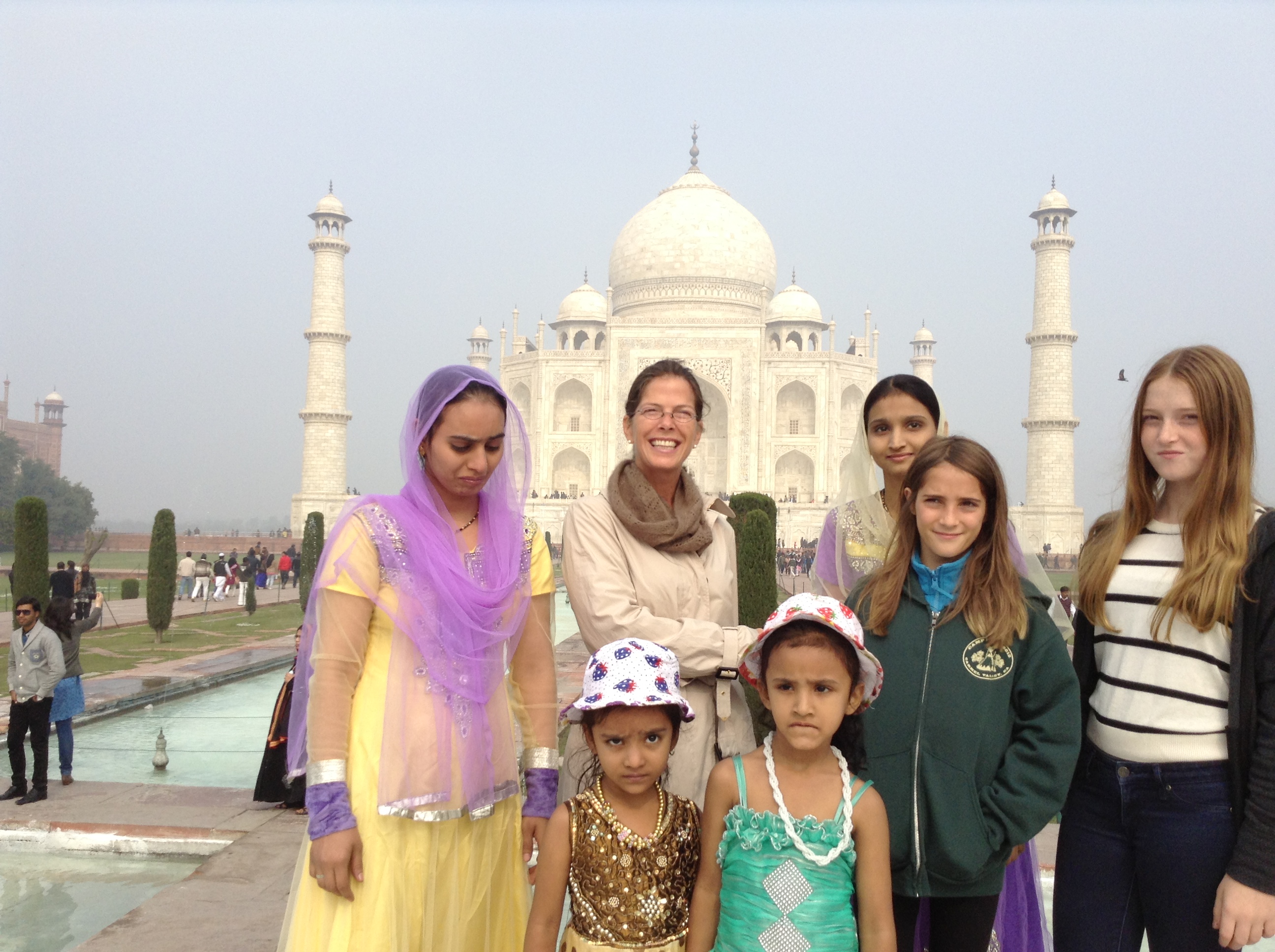
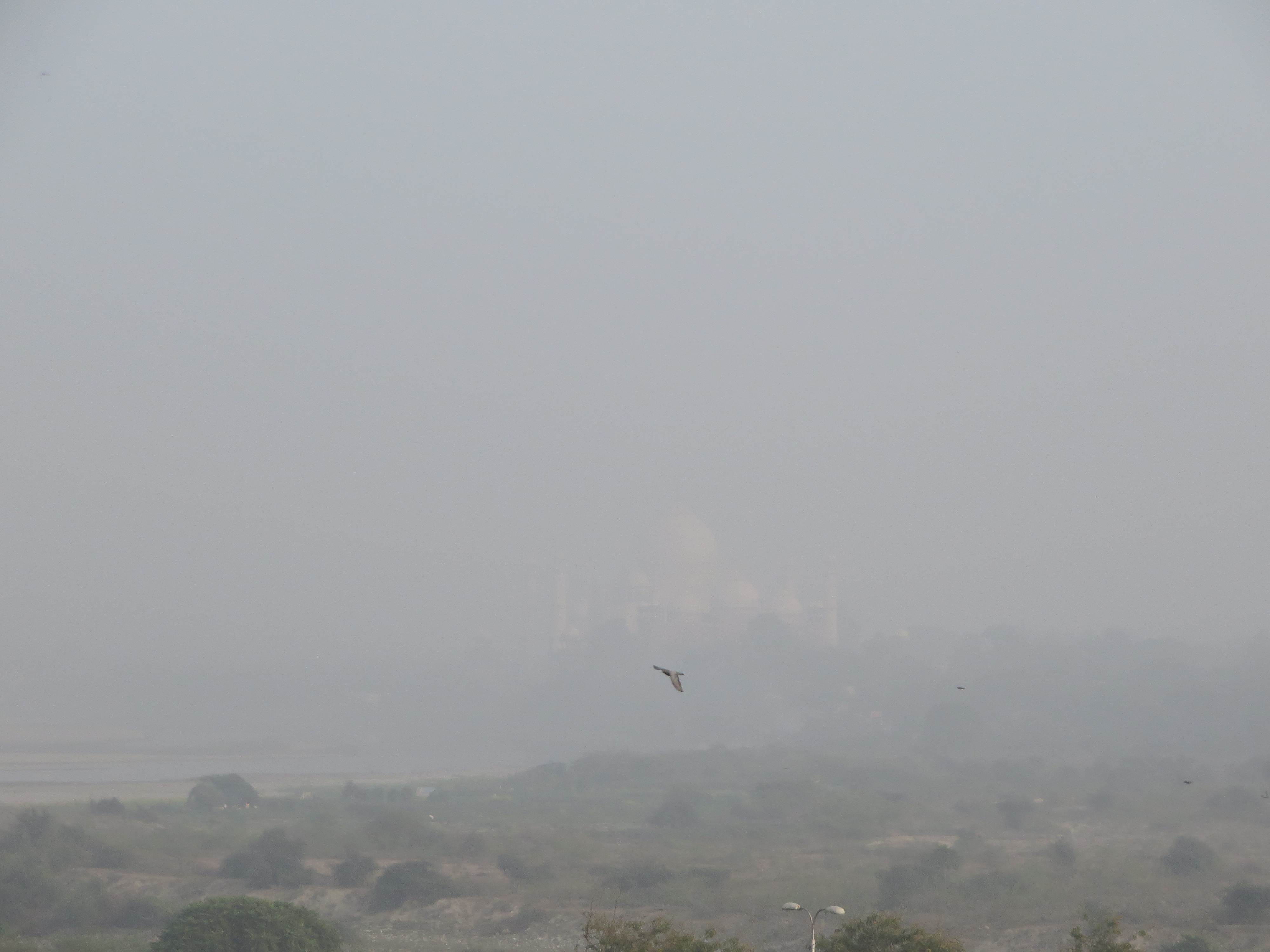
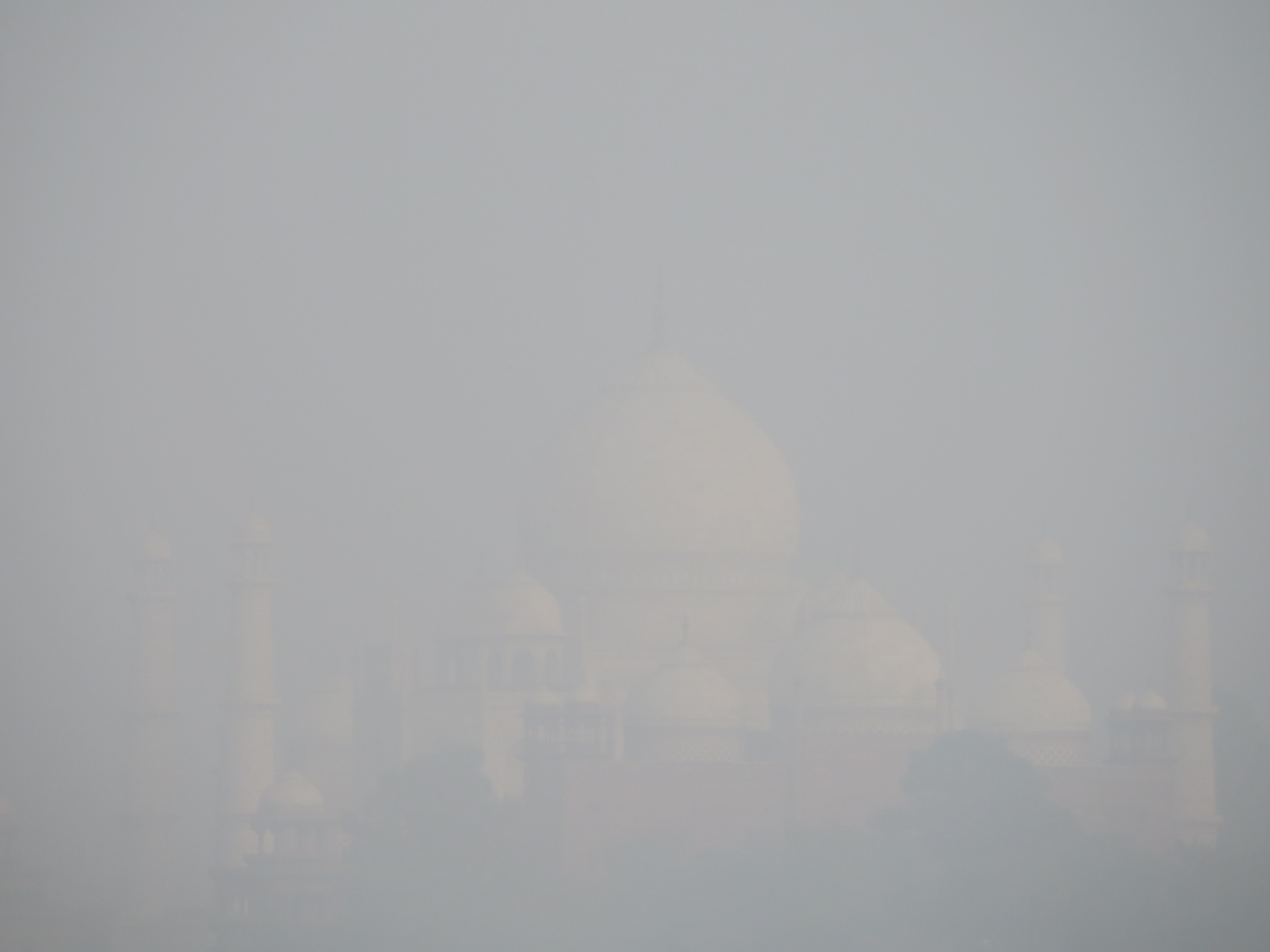
Luckily we had an hour of sun on our walk through the Taj but largely we have spent two days watching her appear and then disappear into the fog. As we leave this morning she is again eluding our lenses; but not our memory.
*About that asterisk. As built, the Taj is perfectly symmetrical. And from the outside it still is. However, when Shah Jahan died, he was placed inside next to his beloved wife. His tomb is larger and higher than hers. Also, our guide tells us that contrary to what we read in tour books, the Taj was completed in 18, not 22 years. A lovely man with a PhD trumps Lonely Planet. (Thank you Leonard R for introducing us.)



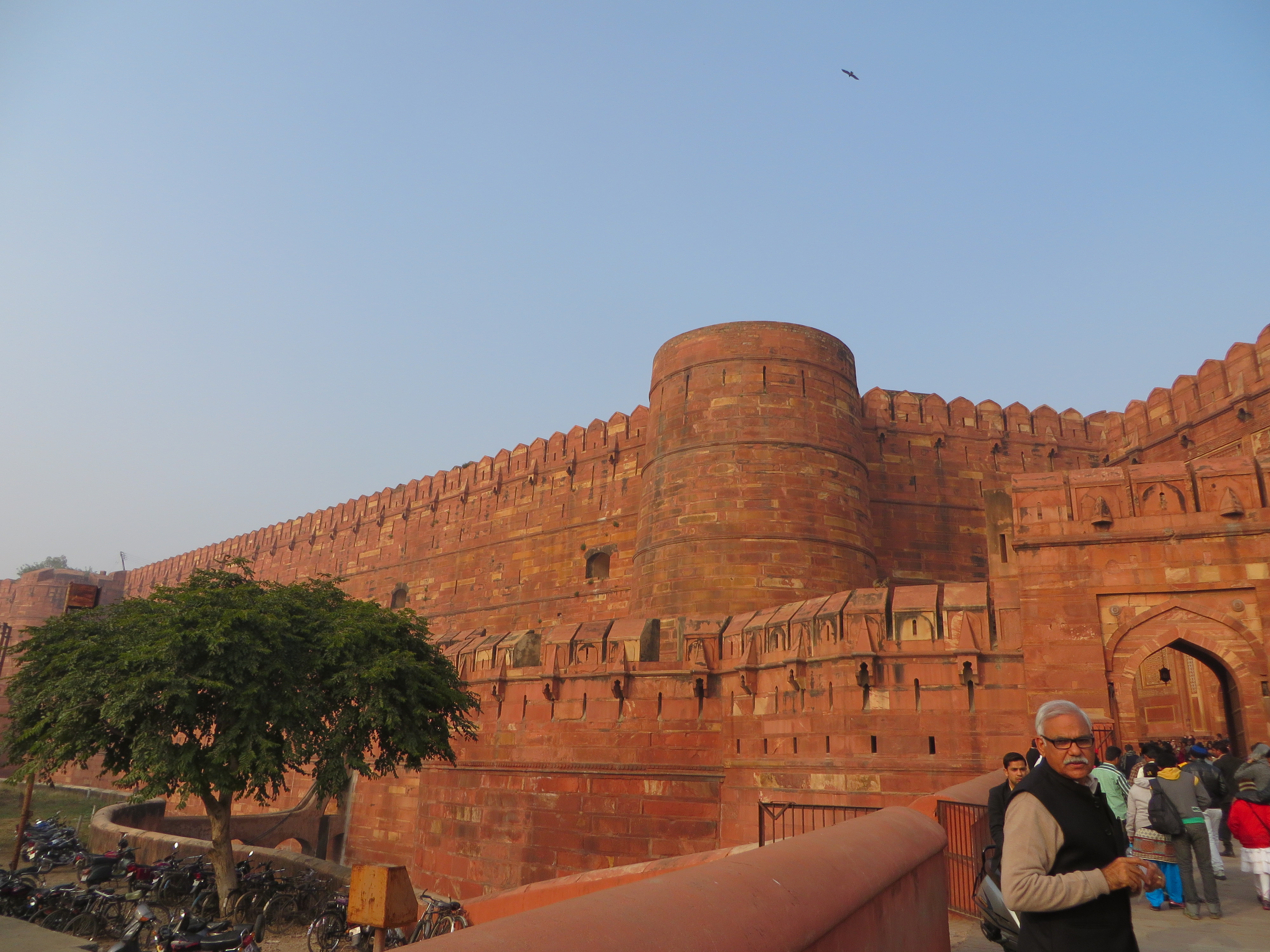
Agra Fort

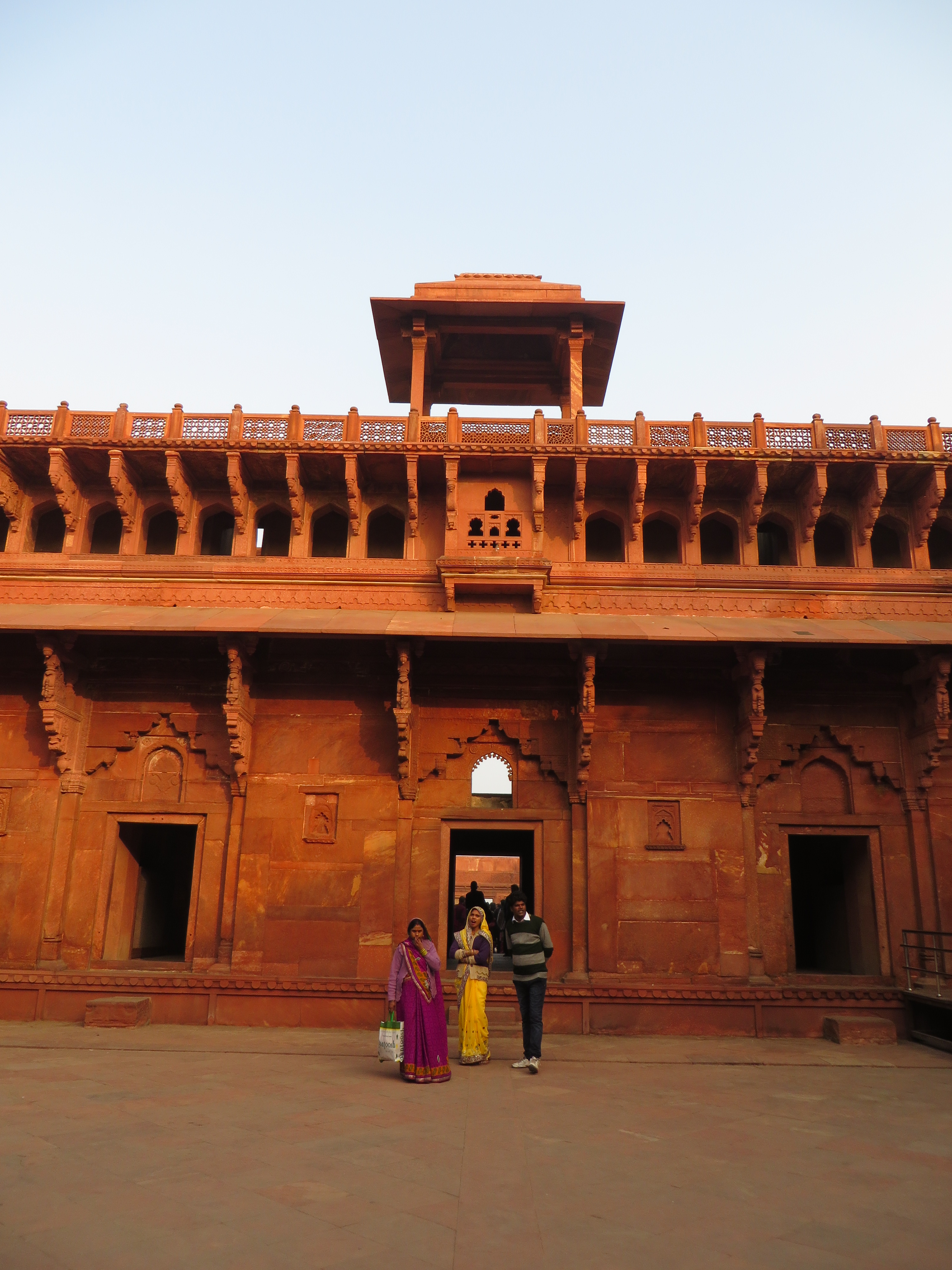

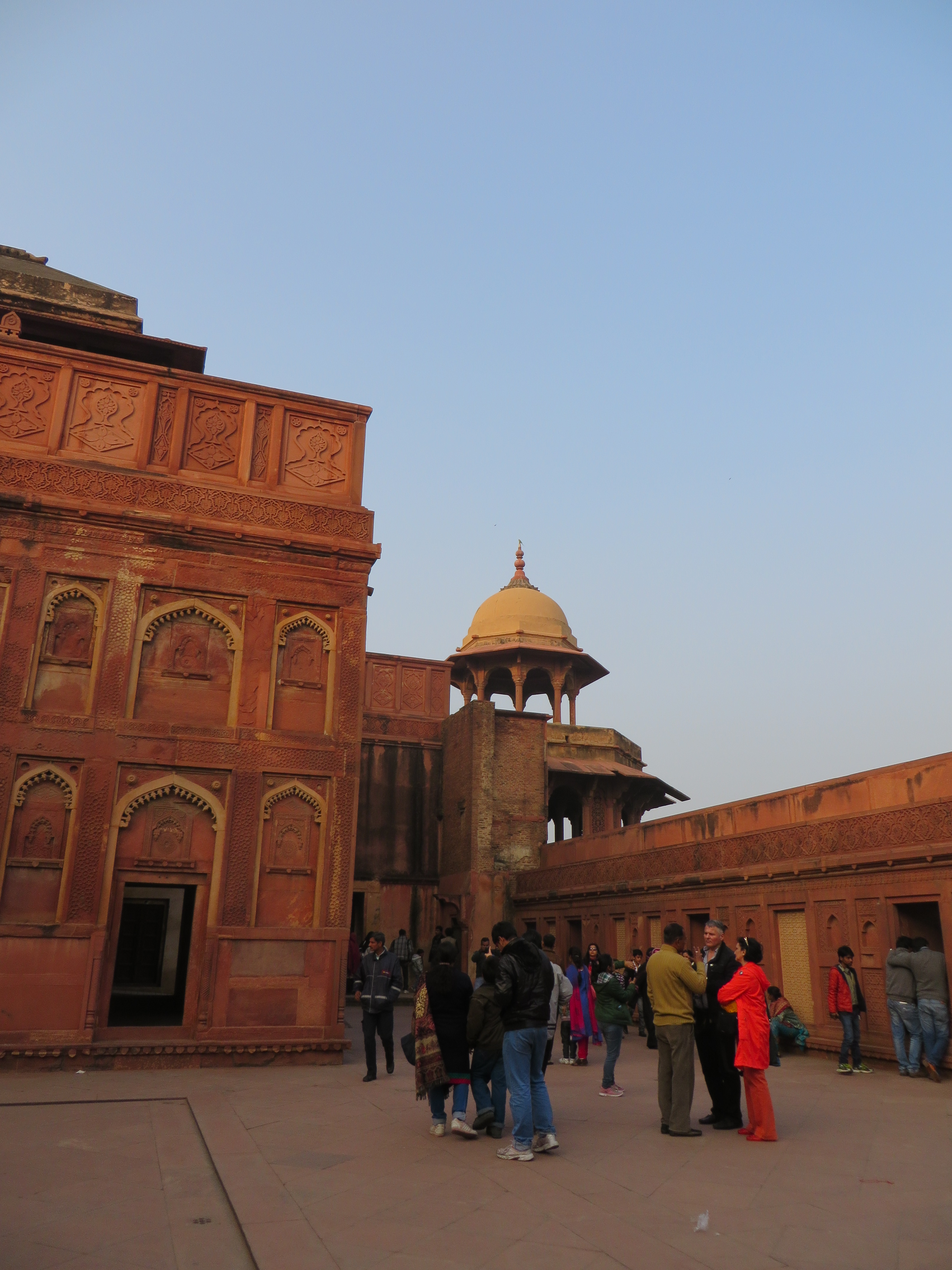
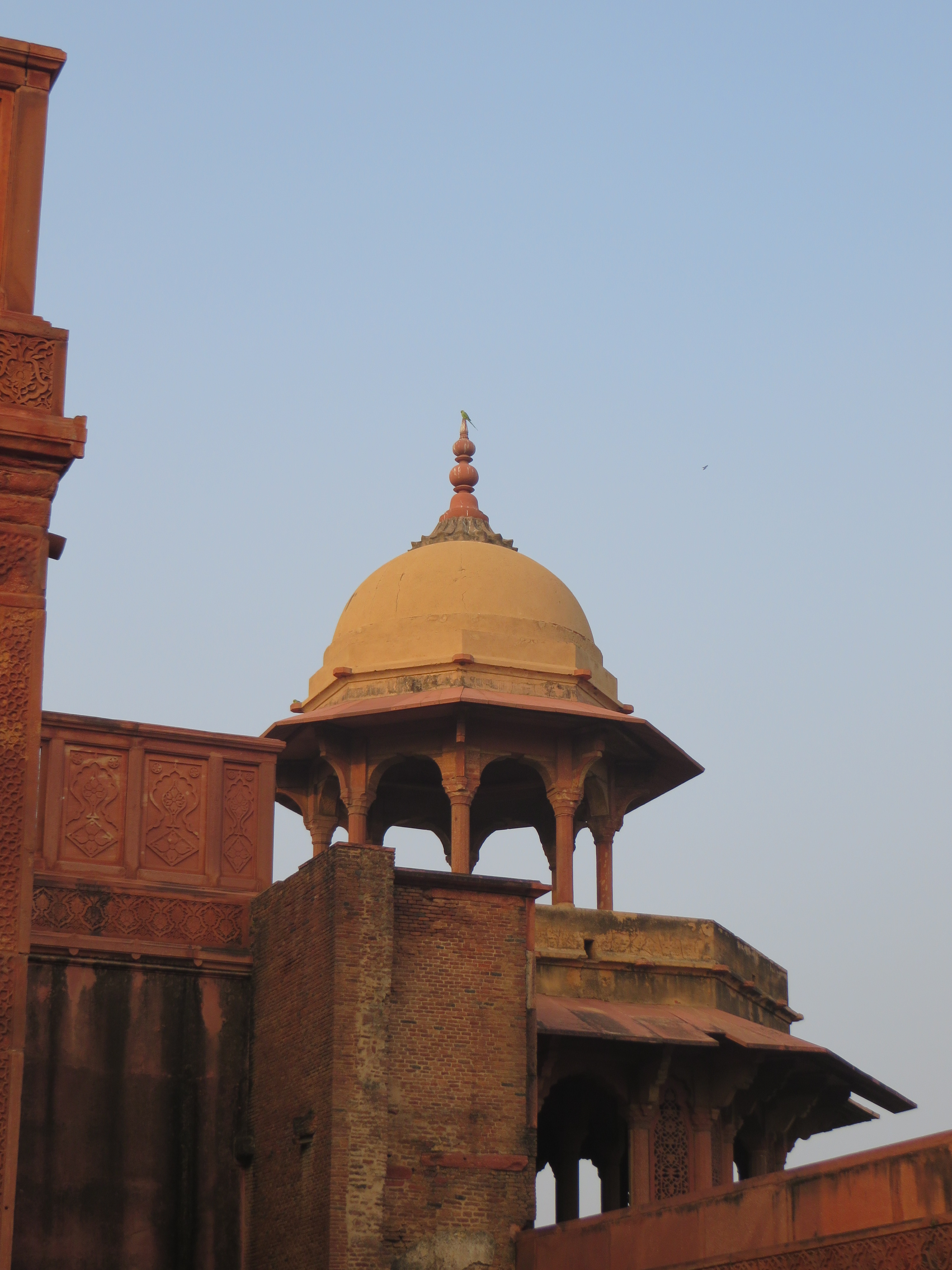
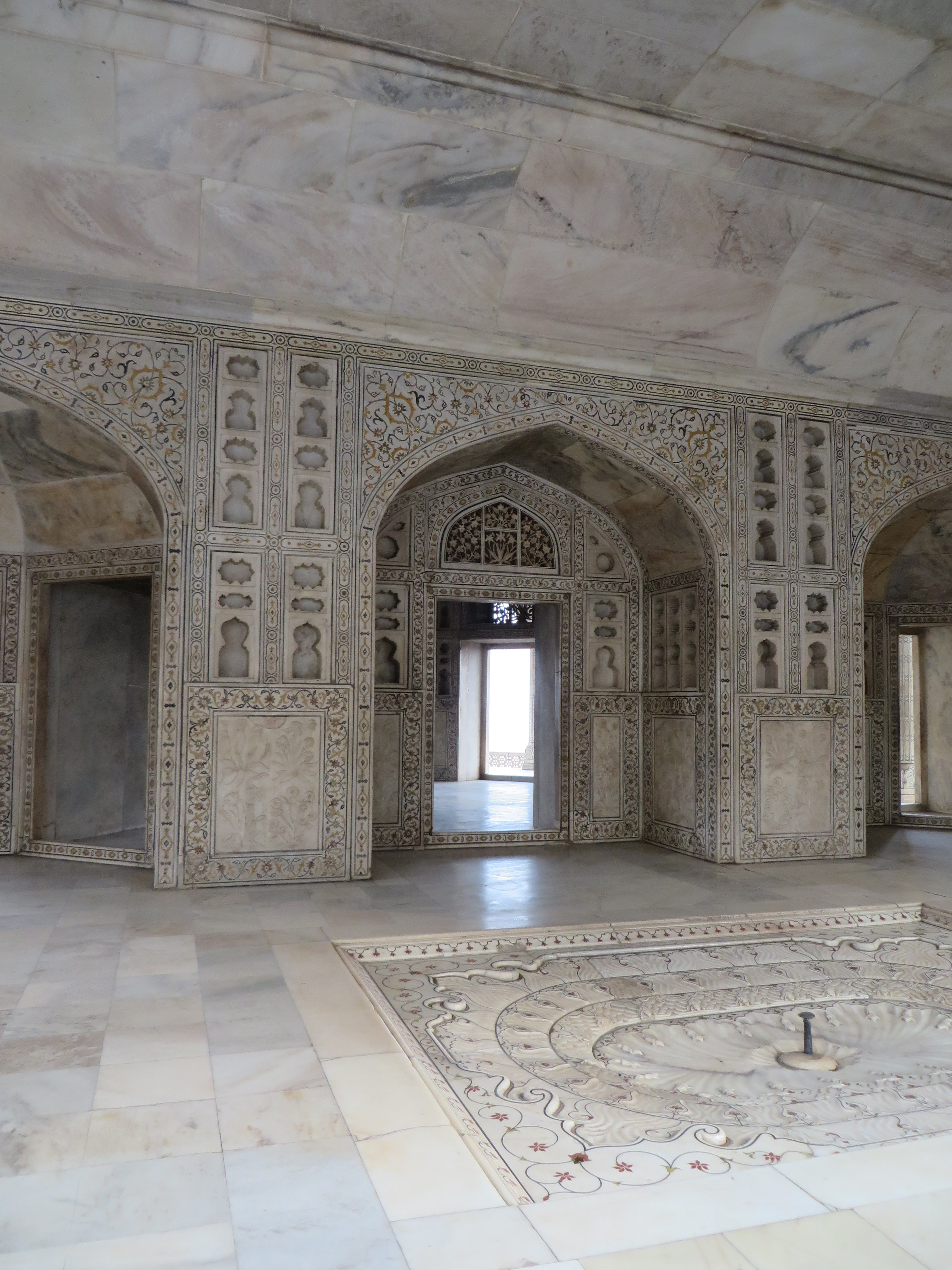
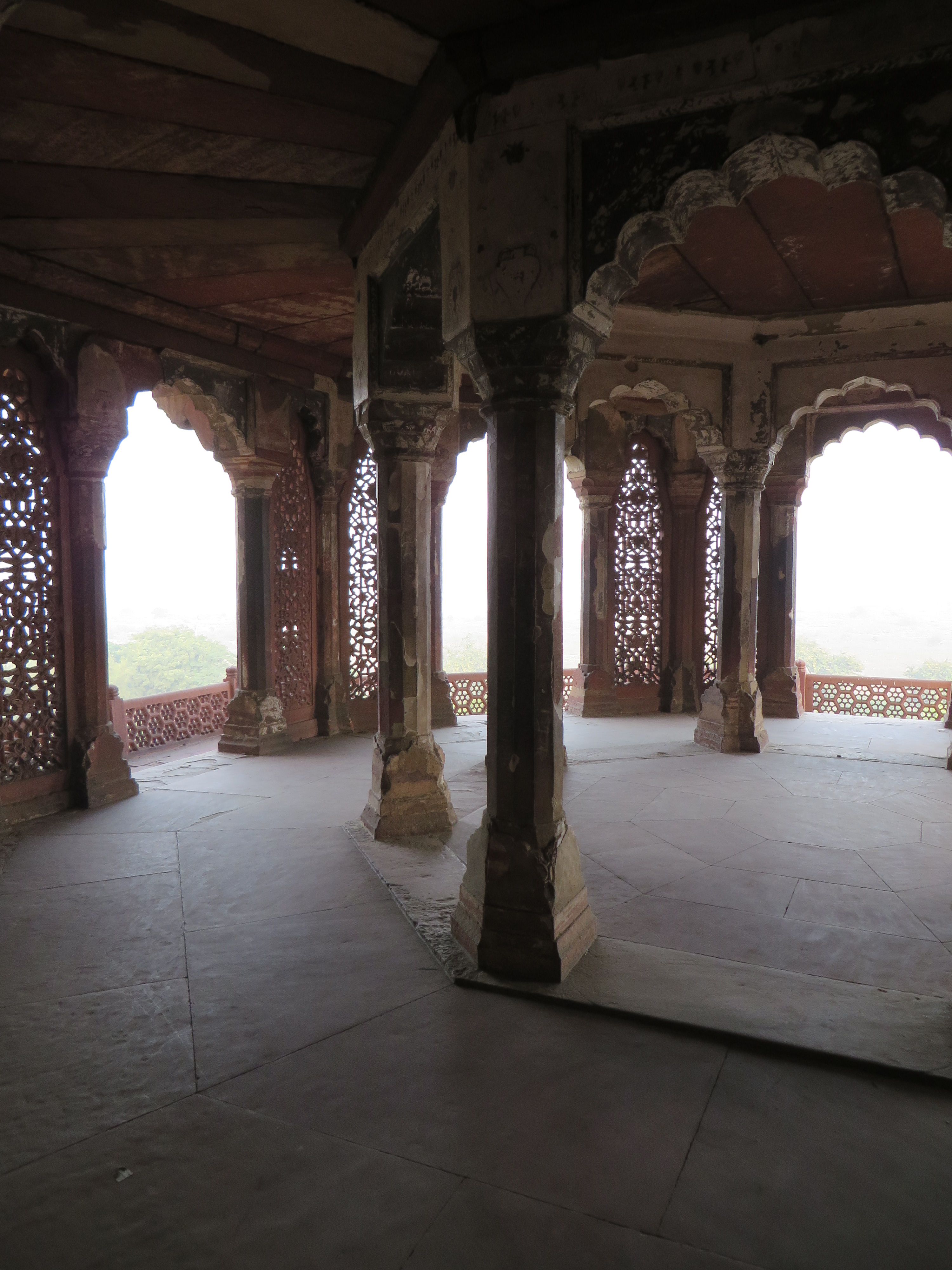
Shah Jahan’s Chambers during Confinement and his view to the Taj Mahal
 Davidson Big Trip

Spectacular. Beautiful. Similar to The Ranch!
Wow! Loved the history and photos…what an experience!
Awesome
Thanks!
We are thrilled to read your narrative and see your photos.So pleased you enjoyed one of our favorite sites.
Thanks, I didn’t expect to like it as much as I did. When they put the torch to show the number of stones I was astonished. We also went to one of the older inlay workshops (5th generation) so the girls could better appreciate the work that went into inlay art. We saw them cutting and smoothing stone pieces that were less than 1 x 1 mm. If you have friends that are going it’s Subhash Emporium.
I was awed at the Taj Mahal also. Pictures really don’t do it justice. You think it is just a big white building but it is actually so colorful. The mind boggles to think of all the workmanship in the inlay. It is too bad though that the gardens are a bit run down. In its heyday, it must have been magnificent.