
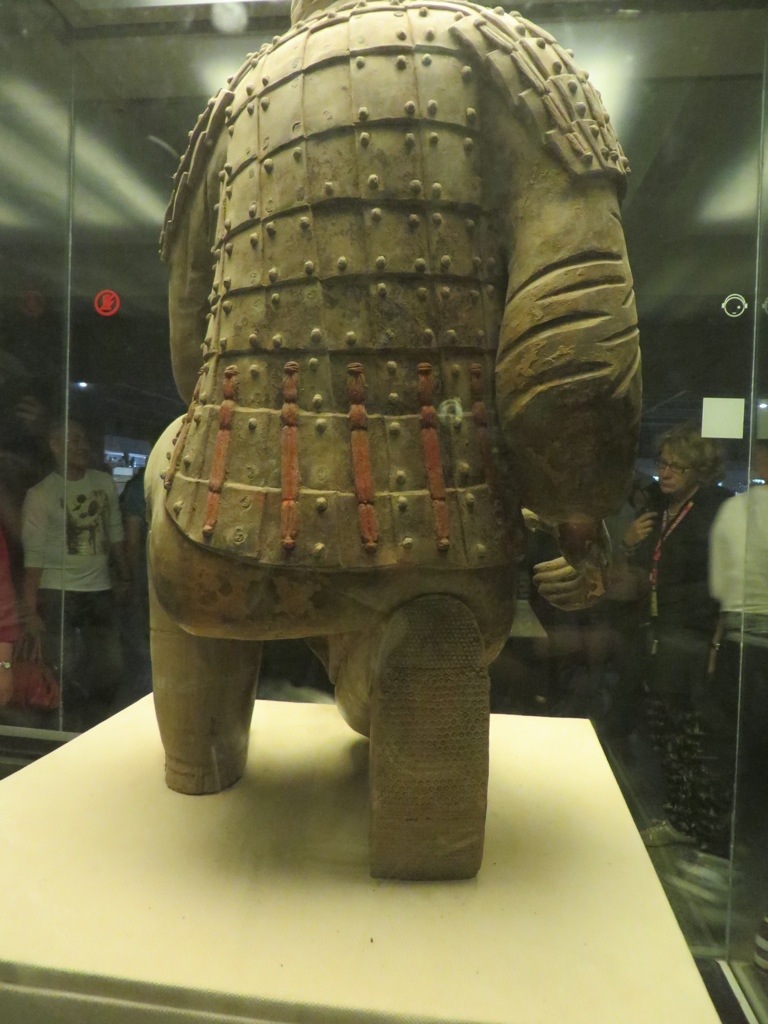
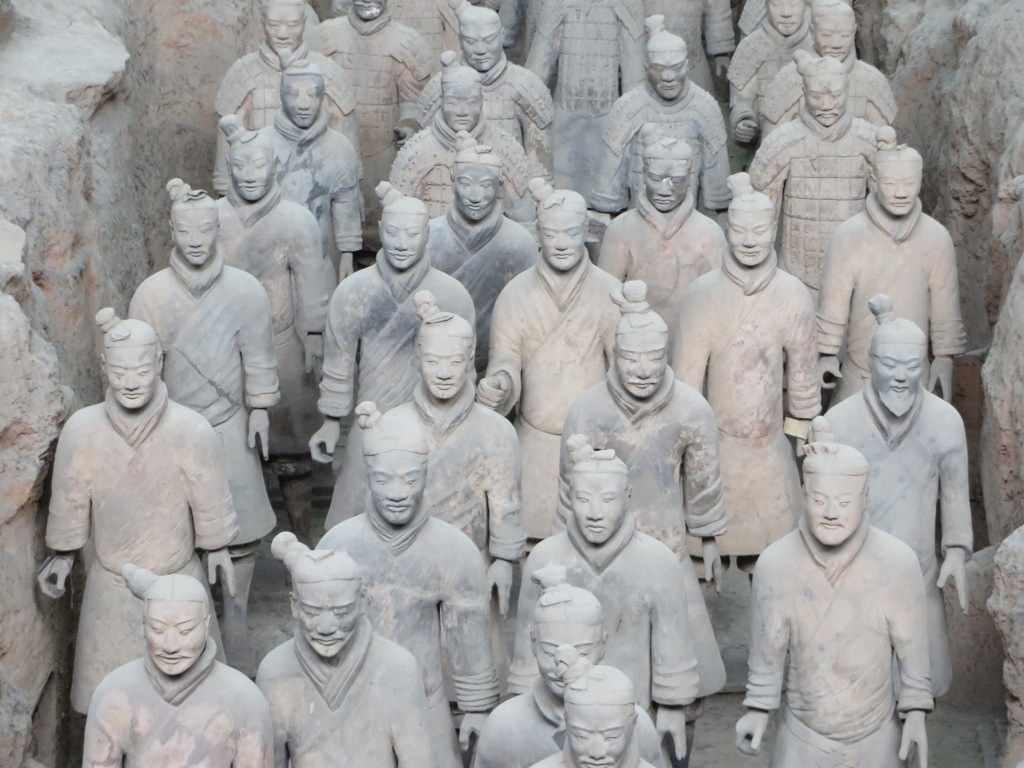
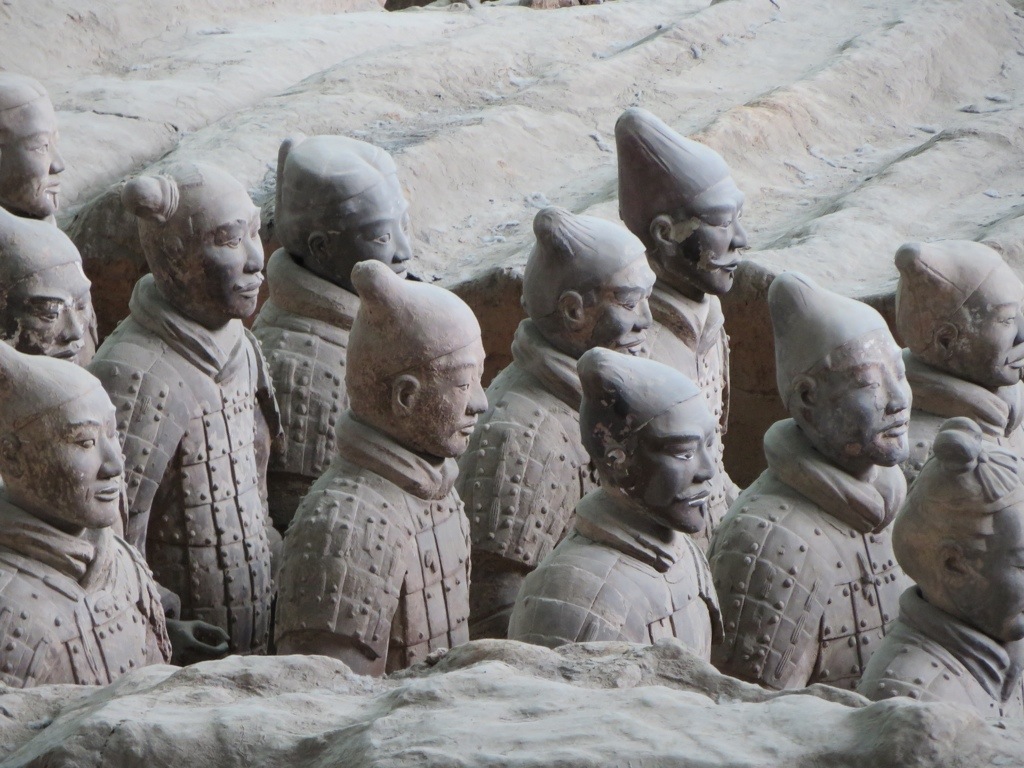
We arrived Xi’an late Monday night and set out 9:30 Tuesday morning for the terra cotta soldiers. The photo gallery doesn’t do them justice. They are very detailed works, down to the soles of their shoes they are perfect copies of what the imperial soldiers might have worn during the reign of unified China’s first emperor. We had private platform viewing for 5-10 minutes which allowed us to escape the crowds and get good photos of the first pit of soldiers unearthed in the late 70s.
If you don’t know the story, the terra cotta soldiers were discovered when a group of farmers were digging a well. When they brought up the bucket of earth, they found pieces of a terra cotta soldier. (The actual place is marked and interestingly, had he decided to dig only one or two meters further north, the soldiers may never have been unearthed.) At first the farmers didn’t report their findings but one soldier decided to report in secret to the Government. THAT farmer was rewarded with a large sum of money and a full time job signing books in the museum; not sure what happened to the others.
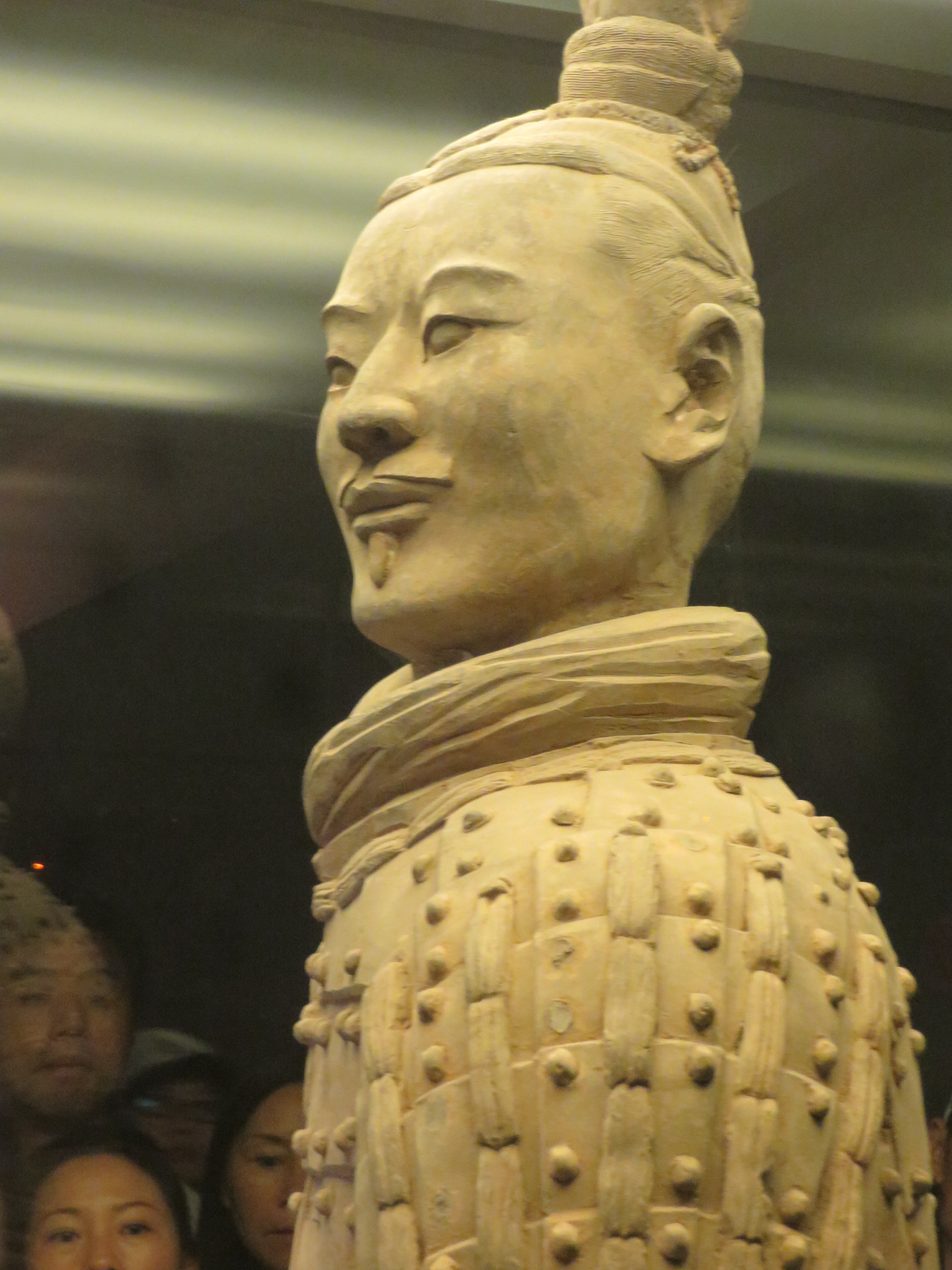
Emperor Qinshi Huangdi was the first emperor to rule a unified China – I should say that differently. He unified China under one ruler consolidating the various kingdoms by overtaking them militarily. He is said to have been a brutal ruler. In any case, he presided over a unified China. Once unification was achieved he set about connecting the various ramparts into The Great Wall and building his tomb. Seven hundred twenty thousand men spent 38 years building his tomb and then filling it with soldiers, weapons, food, concubines and treasures to accompany the emperor on his death to the afterlife. After the Emperor died, there was a peasant uprising and the peasants raided the tomb. They took the weapons as arms and smashed and burned the remaining contents. Of the thousands of soldiers unearthed so far, only one has been found in tact. An archer. I found his expression quite peaceful and his is the close up that you will see below.
There are three pits excavated so far and only 2,000 of the 8,000 soldiers are restored. The staff working to reassemble these smashed soldiers face an incredibly difficult task. For now the unearthing is on hold until they can figure out how to preserve the colors of the figures. As you have seen perhaps in photos previously, and in the ones below, the figures appear to be of simple earthenware color but when they were first discovered and put on display they had blue pants, red jackets, and purple adornments. Once exposed to the air, the colors faded so preservationists from China, Germany and elsewhere are working on a process to preserve the colors before they excavate the two other pits.
There is a movie at the museum building at the site and seeing it is worthwhile. You can also get the farmer’s autograph while you are there!
It was a great experience.
We spent the rest of our time exploring the muslim quarter, doing homework and riding bikes on the city wall. A quick lunch and now it’s off to Chengdu to volunteer for a day caring for (feeding and cleaning cages) the great Pandas!
K


 Davidson Big Trip